What to Combine DHEA With
The question "what to combine DHEA with" usually implies a search for "synergy." However, for a substance that is converted into sex hormones, another question is more important: which combinations are safe and make sense for health, and which increase the risks. The editorial team does not compile "stacks" and regimens but explains what is known from studies about DHEA in combination with lifestyle, basic nutrients, and other agents.
Why combinations with DHEA require caution
DHEA is not a neutral nutrient but a precursor of androgens and estrogens. Any substance that changes the synthesis, conversion, or action of sex hormones can enhance or weaken the effects of DHEA in an unpredictable way. Therefore the logic of "I'll add something else to enhance it" is especially risky here.
The second reason is the accumulation of side effects. If DHEA already increases the risk of acne, hair growth in women, or a rise in estrogens in men, then the simultaneous intake of other hormonally active products makes these effects more likely, and establishing the "culprit" becomes almost impossible.
The third reason is the lack of studies. Practically all clinical data concern DHEA as monotherapy or as a supplement to standard treatment under a doctor's supervision. No one has systematically studied combinations with popular sports boosters.
Thus, the most justified "combinations" are not other supplements but basic things: training, proper nutrition, sufficient sleep, and laboratory monitoring. It is with these that we will begin.
DHEA and physical training
The most interesting data on combinations concern training in old age. In a randomized study by Villareal and Holloszy, older men and women received DHEA or placebo for several months and then added strength training. In the DHEA group the gain in muscle mass and strength was somewhat greater than in the placebo group.
This result is important to interpret correctly. It concerns elderly people with an age-related decline in DHEA-S who started training from a low level. Such conclusions do not transfer to young athletes with a normal hormone level: in the study by Brown and colleagues, 100 mg of DHEA per day in young men added neither strength nor muscle mass compared with placebo.
In other words, in old age DHEA may be only a modest supplement to the main factor — regular training. It is training that gives the main effect on muscles, bones, insulin sensitivity, and well-being, and this effect does not depend on supplements.
For competing athletes, the question of combination does not arise at all: DHEA is banned by WADA regardless of what it is combined with.
Nutrition, vitamin D, calcium, and sleep
The DHEAge study and other works with older people studied the effect of DHEA on bone tissue, and some of them showed slight positive changes in bone mineral density in older women. However, for bones the basic factors are far more important: sufficient calcium intake, a normal vitamin D level, and load.
Vitamin D is appropriate to take based on the results of a 25(OH)D test, and calcium — primarily from food. These nutrients do not enhance the hormonal action of DHEA but cover deficits typical of old age, which affect bones and muscles far more than DHEA itself.
A sufficient amount of protein in the diet is another condition without which any hopes of preserving muscle mass are futile. For older people, protein and training are key means of preventing sarcopenia.
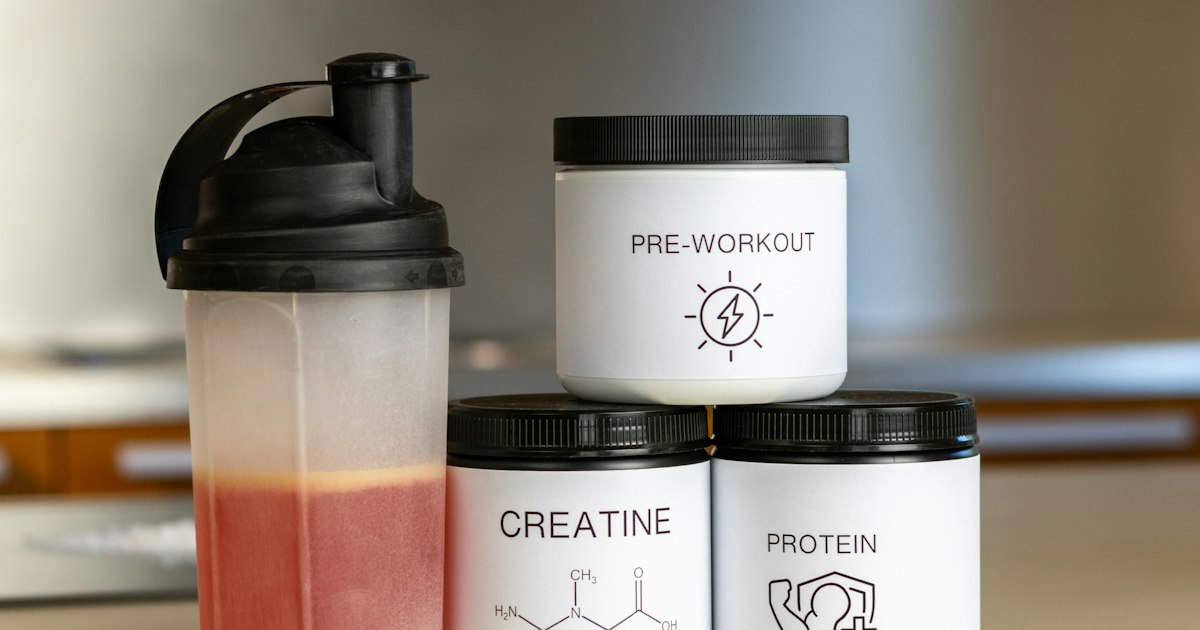
Sleep deserves separate mention: in some people DHEA causes agitation and worse falling asleep with evening intake. Therefore combining DHEA with "stimulants" — caffeine pre-workout complexes, fat burners — may worsen sleep even more.
| Combination | Justification | Editorial comment |
|---|---|---|
| Strength training | RCT in older people | The main effect comes from training |
| Vitamin D, calcium | Correction of deficits for bones | By test, not for "enhancing" DHEA |
| Protein in the diet | Prevention of sarcopenia | Basic condition |
| Caffeine, stimulants | No data on benefit | May worsen sleep |
| Other hormonal agents | No studies, additive risks | Do not combine on your own |
Undesirable and dangerous combinations
The most risky is combining DHEA with anabolic steroids, prohormones, and testosterone "boosters." Such combinations increase the load on the hormonal system, contribute to an excess of estrogens and androgens, and make it impossible to assess what exactly caused an adverse reaction.
Pregnenolone, which is located even higher in the chain of steroidogenesis, is often sold together with DHEA. Taking them together without medical indications means simultaneously interfering with several links in hormone synthesis, and there is practically no research on the safety of such a combination.
The self-administered use of antiestrogens or aromatase inhibitors "to protect" against the estrogenic effects of DHEA is a mistaken strategy. These drugs have their own serious side effects, and excessive suppression of estrogens harms bones, lipids, and well-being in both women and men.
- anabolic steroids and prohormones — additive hormonal risks, violation of doping rules;
- herbal testosterone "boosters" with an unclear composition — unpredictable interactions;
- pregnenolone and other steroid precursors — lack of safety data;
- antiestrogens without prescription — their own serious risks;
- regular alcohol abuse — a load on the liver, where steroids are metabolized.
Medications that require coordination with a doctor
For women receiving estrogen hormone replacement therapy, adding DHEA may increase the total estrogenic and androgenic action. Any changes should be coordinated with the gynecologist or endocrinologist managing the therapy.
For people with adrenal insufficiency, DHEA is sometimes prescribed as a supplement to glucocorticoids and mineralocorticoids. The Endocrine Society's guideline permits a trial use in some women, but this is part of a treatment plan, not an independent decision.
For men on testosterone therapy, additional DHEA is usually not needed: the main androgen already comes from outside. The combination can only increase the risk of estrogenic effects.
People taking antidepressants, mood stabilizers, or antipsychotics should discuss DHEA with a psychiatrist, since cases of hypomania against the background of DHEA use have been described. It is also worth informing the doctor about DHEA before any hormonal examination, because it changes test results.
Editorial conclusions
The best-justified "combination" with DHEA is regular strength training, proper nutrition, correction of deficits by tests, and quality sleep.
Combinations with prohormones, steroids, pregnenolone, antiestrogens, and "boosters" increase the risks and have no evidence of benefit.
A combination with hormone therapy, glucocorticoids, and psychotropic drugs is possible only by a doctor's decision.
We also recommend our articles "How to Take DHEA: Dosage, Timing, Duration," "Who Should Not Take DHEA," and "Pregnenolone: What It Is and How It Works."
References
- Villareal DT, Holloszy JO. DHEA enhances effects of weight training on muscle mass and strength in elderly women and men. Am J Physiol Endocrinol Metab. 2006;291(5):E1003–E1008.
- Brown GA, Vukovich MD, Sharp RL, et al. Effect of oral DHEA on serum testosterone and adaptations to resistance training in young men. J Appl Physiol. 1999;87(6):2274–2283.
- Baulieu EE, Thomas G, Legrain S, et al. Dehydroepiandrosterone (DHEA), DHEA sulfate, and aging: contribution of the DHEAge Study to a sociobiomedical issue. Proc Natl Acad Sci USA. 2000;97(8):4279–4284.
- Bornstein SR, Allolio B, Arlt W, et al. Diagnosis and treatment of primary adrenal insufficiency: an Endocrine Society clinical practice guideline. J Clin Endocrinol Metab. 2016;101(2):364–389.
- Wierman ME, Arlt W, Basson R, et al. Androgen therapy in women: a reappraisal: an Endocrine Society clinical practice guideline. J Clin Endocrinol Metab. 2014;99(10):3489–3510.
- Kroboth PD, Salek FS, Pittenger AL, et al. DHEA and DHEA-S: a review. J Clin Pharmacol. 1999;39(4):327–348.
- World Anti-Doping Agency. Prohibited List. Montreal: WADA; чинна редакція.
Andriy Melnyk
A strength-sports coach and author of programs for beginner and intermediate levels. Writes about training planning.